Dual-Task Paradigm: Working Memory and the Allocation of Limited Cognitive Resources
Abstract
The dual-task paradigm is one of the major experimental approaches for investigating the limitations of attention, working memory, and executive control. This paper considers the application of the paradigm to a situation in which a person simultaneously performs an optimization task and maintains a sequence of color stimuli in working memory. This approach makes it possible to examine not only performance deterioration under increasing cognitive load, but also how limited cognitive resources are allocated between competing goals. Particular attention is given to dual-task interference, dual-task cost, attentional switching, decision complexity, and individual resource-allocation strategies. Rather than relying solely on final performance scores, the proposed approach considers the complete behavioral trajectory, including the sequence of actions, decision times, deviations from optimal solutions, and memory-recall errors. The dual-task paradigm can therefore serve as an experimental model of human decision making under conditions of limited working-memory capacity and competing cognitive demands.
Keywords: dual-task paradigm; working memory; attention; executive functions; cognitive load; decision making; optimization; cognitive interference; dual-task cost; resource allocation.
Introduction
In everyday life, a person rarely solves only one task at a time. We drive a car and talk, prepare food and keep the next step of the recipe in mind, search for the needed object and simultaneously plan further actions. Most such situations seem natural; however, from the perspective of cognitive psychology, they pose a complex problem for the brain: how to distribute limited resources between several competing tasks?
One of the main experimental methods for studying this question has become the dual-task paradigm. In it, the participant must simultaneously perform two tasks, each of which places its own demands on attention, working memory, or executive control. By comparing the performance of each task separately and when they are performed simultaneously, researchers can assess the degree of their mutual influence.
Of particular interest is the situation in which one task requires searching for and optimizing a solution, while the second requires retaining information in working memory. A person must not simply respond to stimuli, but simultaneously develop a strategy, evaluate possible actions, and retain information that is not directly related to the current solution.
It is precisely this combination that makes it possible to investigate one of the fundamental questions of cognitive psychology: what happens to the decision-making process when part of the cognitive resources is occupied by another task?
Dual-Task Paradigm
The basic logic of the dual-task paradigm is relatively simple. First, a person performs two tasks independently:
Task A ⇔ Task B.
After that, they are asked to perform them simultaneously:
A + B
If the two tasks use completely independent cognitive mechanisms, performing them simultaneously should theoretically not significantly impair performance. However, if both tasks require the same limited resources, interference (dual-task interference) occurs. It can manifest as increased reaction time, reduced accuracy, impaired memory, or a change in the behavioral strategy itself. Thus, what is of interest is not only a person's absolute performance, but also the cost of performing the tasks simultaneously — dual-task cost.
In its simplest form, it can be represented as the difference between performance in the single-task and dual-task conditions:
DTC = P_single − P_dual
where P_single is the performance efficiency of an individual task, and P_dual is the performance efficiency of the same task under additional cognitive load. The greater the decline in performance, the higher the presumed competition for shared cognitive resources.
From the Idea of Limited Attention to Cognitive Interference
Early studies of dual tasks were closely associated with attempts to understand the limitations of human attention. One of the central issues was the discovery that a person is capable of simultaneously perceiving a large amount of information, but experiences serious difficulties when it is necessary to simultaneously select and perform several independent actions.
Research by Harold Pashler played an important role in shaping modern views of dual tasks. Experiments involving rapid sequences of stimuli showed that the processing of the second task is often delayed until a certain stage of the first task has been completed. This phenomenon became known as the Psychological Refractory Period (PRP). In simplified form, the process can be represented as follows:
Stimulus₁ → Decision₁ → Response₁
Stimulus₂ → waiting → Decision₂ → Response₂
Although the sensory processing of two stimuli can partially occur in parallel, certain central stages of response selection appear to be limited. This gave rise to the idea of a central cognitive bottleneck (central bottleneck).
Is the Brain Really Capable of Performing Two Tasks Simultaneously?
Later studies showed that the picture is more complex. Research by Tombu and Jolicœur demonstrated that interference between tasks does not always need to be explained by strictly sequential processing. Under certain conditions, cognitive resources can be distributed between tasks. Instead of a rigid scheme
A → B
we can represent a limited shared resource:
R_A + R_B ≤ R_total.
If the first task receives most of the available resources, fewer remain for the second. This helps explain a familiar phenomenon: a person can sometimes indeed perform several actions simultaneously, but the quality of one or both actions decreases as a result.
Therefore, the question is no longer simply whether the brain can perform two tasks simultaneously, but rather how it distributes resources between them.
Working Memory as a Limited Resource
The dual-task paradigm has acquired particular importance in studies of working memory. Working memory makes it possible to temporarily retain information while simultaneously using it for ongoing activity. However, its capacity is limited.
If a person needs to remember a sequence of objects and then simultaneously perform a complex task, the new activity may compete with the maintenance of information in working memory. For example, a participant can be presented with a sequence of colors:
red → green → blue → yellow
After that, they must perform a spatial or logical task and then reproduce the original sequence.
Increasing the complexity of the intermediate task makes it possible to observe how resistant the contents of working memory are to additional cognitive load. However, the situation is particularly interesting when memorization and problem solving occur not sequentially, but simultaneously. In this case, the person is forced to continuously distribute attention between maintaining information and searching for a solution.
Executive Control
Performing two tasks simultaneously requires not only memory, but also executive control.
Research on executive functions, particularly the work of Miyake and colleagues, has shown that cognitive control includes several related but partially independent components.
These include:
- maintaining and updating information;
- switching between tasks;
- inhibiting irrelevant actions;
- managing current goals.
The work of Adele Diamond also emphasizes the close relationship between working memory, inhibitory control, and cognitive flexibility. In a dual-task situation, the executive system must constantly decide:
Which task should receive attention right now?
If too many resources are directed toward solving the primary task, information in the second task may be lost. If attention is switched too frequently to memorization, problem-solving efficiency decreases. Thus, human behavior becomes a problem of allocating a limited cognitive resource.
Conflict and Behavioral Control
Another important approach is associated with the research of Matthew Botvinick and colleagues, who proposed the conflict monitoring theory. According to this approach, the cognitive system monitors situations in which competing action alternatives are activated simultaneously. High conflict serves as a signal that cognitive control needs to be increased.
For example, if a person sees several potentially advantageous options for placing an object, competition arises between them. If they must simultaneously remember a color stimulus, additional competition for attention and working memory emerges. Thus, the difficulty of a decision is determined not only by the number of alternatives, but also by the degree of conflict between them.
Optimization as a Cognitive Task
Most classical dual-task experiments use relatively simple tasks: responding to a sound, pressing a key, memorizing digits, or recognizing stimuli. However, real-world decisions are considerably more complex. A person often needs not simply to choose one of two responses, but to find the most advantageous action among several possible alternatives.
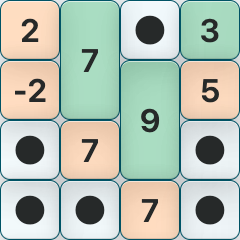
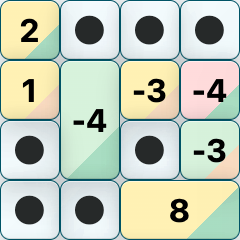
Imagine a field on which objects must be placed sequentially. Different positions produce different outcomes, and the choice of the current position affects the possibilities available for subsequent moves.
In such a situation, a person must:
- evaluate the current state of the field;
- identify possible actions;
- approximately evaluate their consequences;
- choose a promising option;
- perform the action;
- update their representation of the task state.
This is no longer a simple response to a stimulus, but a sequential optimization task.
Conclusion
The dual-task paradigm provides a useful framework for studying how human cognitive systems operate when several processes compete for limited resources. Research on attentional bottlenecks, working memory, executive control, and conflict monitoring suggests that performance under dual-task conditions cannot be understood simply as the simultaneous execution of two independent activities. Instead, it reflects a dynamic allocation of cognitive resources between competing goals.
This issue becomes particularly important when one of the tasks involves not a simple response to a stimulus, but a sequence of decisions aimed at finding an advantageous solution. Such a task requires the participant to maintain information about the current state, evaluate possible actions, anticipate their consequences, and continuously update the chosen strategy. A concurrent working-memory task introduces an additional demand on the same limited cognitive system and may therefore influence both the quality and the dynamics of decision making.
From this perspective, dual-task interference can be examined not only as a decline in overall performance, but also as a change in the way a person searches for and selects solutions. Cognitive load may affect decision time, the depth of evaluation, the ability to maintain information, and the strategy used to distribute resources between the two tasks.
Based on this theoretical framework, the next section describes an experimental dual-task paradigm that combines a sequential optimization task with the simultaneous memorization of color stimuli. The experiment is designed to examine how increasing working-memory demands affect decision-making performance and how the complexity of decision making, in turn, influences memory performance.
- Pashler, H. (1994). Dual-task interference in simple tasks: Data and theory. Psychological Bulletin, 116(2), 220–244.
- Pashler, H. (1998). The Psychology of Attention. Cambridge, MA: MIT Press.
- Tombu, M., & Jolicœur, P. (2003). A central capacity sharing model of dual-task performance. Journal of Experimental Psychology: Human Perception and Performance, 29(1), 3–18.
- Baddeley, A. D., & Hitch, G. J. (1974). Working memory. In G. H. Bower (Ed.), The Psychology of Learning and Motivation (Vol. 8, pp. 47–89). Academic Press.
- Baddeley, A. (2000). The episodic buffer: A new component of working memory? Trends in Cognitive Sciences, 4(11), 417–423.
- Miyake, A., Friedman, N. P., Emerson, M. J., Witzki, A. H., Howerter, A., & Wager, T. D. (2000). The unity and diversity of executive functions and their contributions to complex “frontal lobe” tasks: A latent variable analysis. Cognitive Psychology, 41(1), 49–100.
- Diamond, A. (2013). Executive functions. Annual Review of Psychology, 64, 135–168.
- Botvinick, M. M., Braver, T. S., Barch, D. M., Carter, C. S., & Cohen, J. D. (2001). Conflict monitoring and cognitive control. Psychological Review, 108(3), 624–652.
- Simon, H. A. (1955). A behavioral model of rational choice. The Quarterly Journal of Economics, 69(1), 99–118.
- Payne, J. W., Bettman, J. R., & Johnson, E. J. (1993). The Adaptive Decision Maker. Cambridge University Press.